

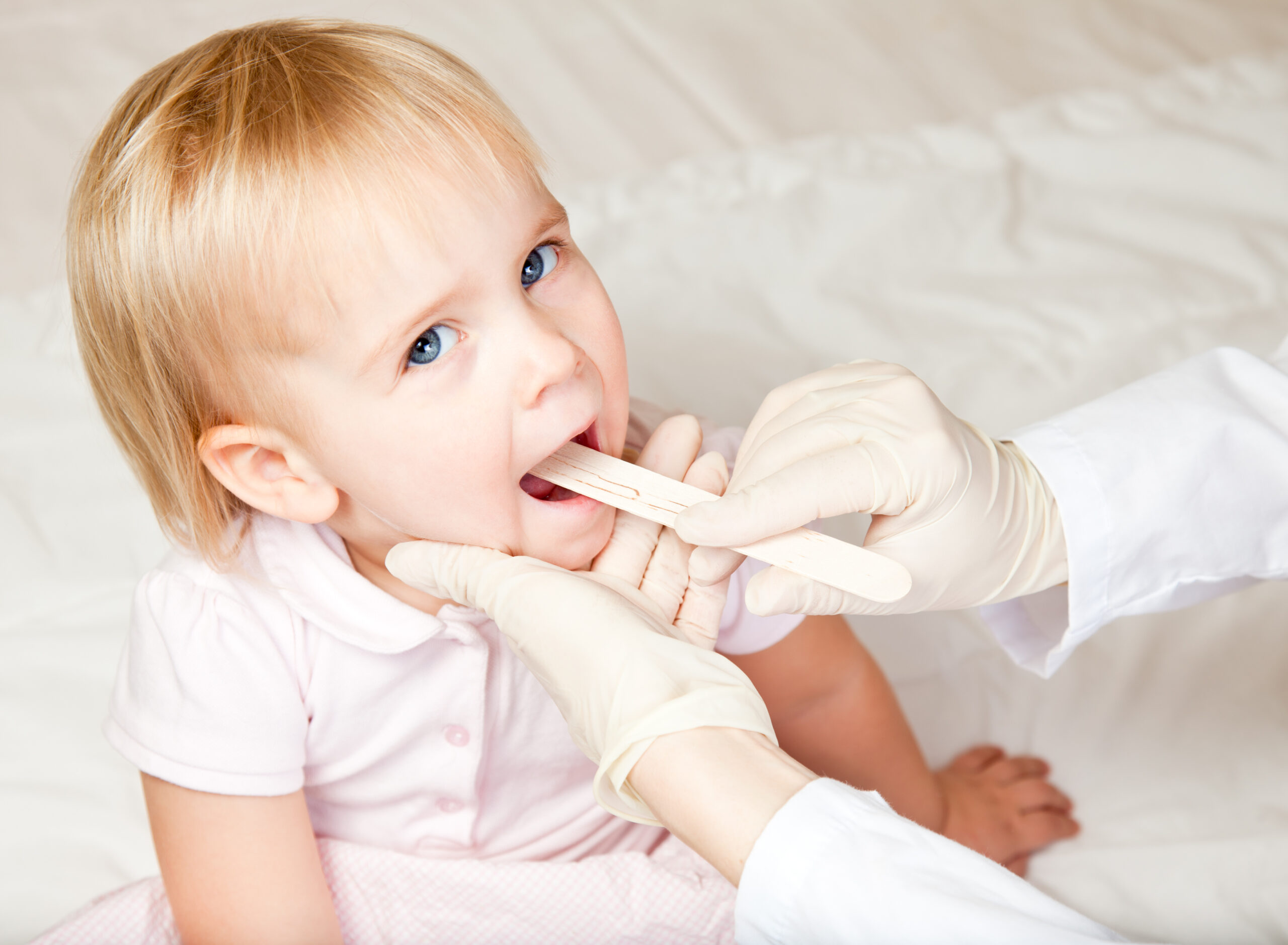
Strep throat is a common infection in children that can cause a sore throat and other symptoms. It is caused by group A streptococcus (strep A), which can also cause other infections such as scarlet fever, impetigo, and cellulitis. Strep throat usually needs treatment with antibiotics, but sometimes it can lead to serious complications such as rheumatic fever or invasive group A streptococcal infection (iGAS), which can be life-threatening.
In this blog, some tips on how to diagnose strep throat in children in the UK are shared, and how to tell it apart from a viral sore throat. What advice should be given to the child’s parents or caregiver on when to seek medical help for strep throat in children is also reviewed.
How to recognise strep throat in children
Strep throat can be recognised by the following symptoms:
- A sore throat that may be red, swollen, or have white patches.
- Fever (a high temperature above 38C)
- Swollen glands in the neck
- Headache
- Nausea and vomiting
- Sometimes a rash that feels rough like sandpaper (scarlet fever)
The symptoms usually start within 2 to 5 days of exposure to the bacteria and last for about a week. Strep throat is more common in children aged 5 to 15 years but can also occur in adults.
It is uncommon in children younger than 3 years old but can occur. When babies and toddlers get infected with strep A, they tend to have fever with fussiness, poor appetite, and a runny nose, but not the typical throat problems.
How to diagnose strep throat in children
Strep throat infections are usually diagnosed and treated based on the child’s symptoms, rather than test results. Throat swabs may be taken. In the UK, rapid turnaround swab tests are not used routinely for strep throat because they are not very accurate and can miss some cases of infection.
A throat swab can confirm if the child has strep A or another cause of sore throat. The swab is taken from the back of the child’s throat using a cotton bud. The swab is then sent to a laboratory for testing. The test results may take a few days to come back.
Advice to parents: when to seek medical help for strep throat in children.
Most cases of strep throat are not serious and can be treated at home with antibiotics and supportive care. However, some children may develop complications or signs of a more severe infection that need urgent medical help. Parents or caregivers should call NHS 111 or contact their health care provider if their child:
- Has a high temperature that does not come down with paracetamol or ibuprofen.
- Has difficulty breathing, swallowing, or opening their mouth.
- Has severe pain in their throat, chest, abdomen, or joints.
- Has a rash that feels rough like sandpaper (scarlet fever)
- Has signs of dehydration such as dry mouth, sunken eyes, reduced urine output, or drowsiness.
- Has any other symptoms that worry them or do not improve after taking antibiotics.
Parents or caregivers should call 999 or go to A&E if their child:
- Has difficulty breathing – such as grunting or subcostal recessions.
- Has pauses when they breathe.
- Has blue or grey skin, tongue, or lips – on black or brown skin this may be easier to see on the palms of the hands or soles of the feet.
- Is floppy and will not wake up or stay awake.
These could be signs of iGAS, which is a rare but life-threatening condition that needs immediate treatment in hospital.
I hope this blog has helped you learn more about how to diagnose strep throat in children.
You can learn more about Strep throat in children in our main article and our RCN Accredited Paediatric Minor Illness training course for healthcare providers.
