

You might be doing all the right things already. You remind your child to brush, you keep an eye on sugary snacks, and you schedule checkups at a Greenbelt pediatric dental office because you want to stay ahead of problems, not scramble after a cavity shows up. Then you hear about fluoride at a dental visit and wonder if it is really needed, or if regular brushing is enough. That question is common, especially when you are trying to make smart choices without overdoing anything.
The short answer is yes, fluoride can play an important role in protecting growing teeth. For many children, professional fluoride treatments add a layer of defense that home care alone may not provide. When used correctly, fluoride helps strengthen enamel, lowers the risk of decay, and supports healthier smiles as children grow. If you are weighing the value of a children’s fluoride treatment, it helps to understand what it does, who benefits most, and how it fits into routine care from a pediatric dentist.
Why do children get cavities even when you are trying hard?
This is often the part that feels frustrating. You can be consistent at home and still hear that a small cavity is forming. Baby teeth have thinner enamel than adult teeth, which means decay can move faster. Add in juice, snack foods, bedtime milk, uneven brushing habits, and the simple fact that many children are still learning how to clean every surface well, and the risk starts to make more sense.
Because of this, fluoride matters. It helps rebuild weakened areas of enamel before they turn into larger problems. According to the National Institute of Dental and Craniofacial Research, fluoride can help prevent tooth decay by making teeth more resistant to acid attacks from plaque, bacteria, and sugars in the mouth.
So, where does that leave you if your child seems cavity-prone? It means prevention usually works best in layers. Daily brushing with fluoride toothpaste, healthy routines, regular cleanings, and in-office fluoride applications often work together better than any one step on its own.
What does a fluoride treatment actually do for a child’s teeth?
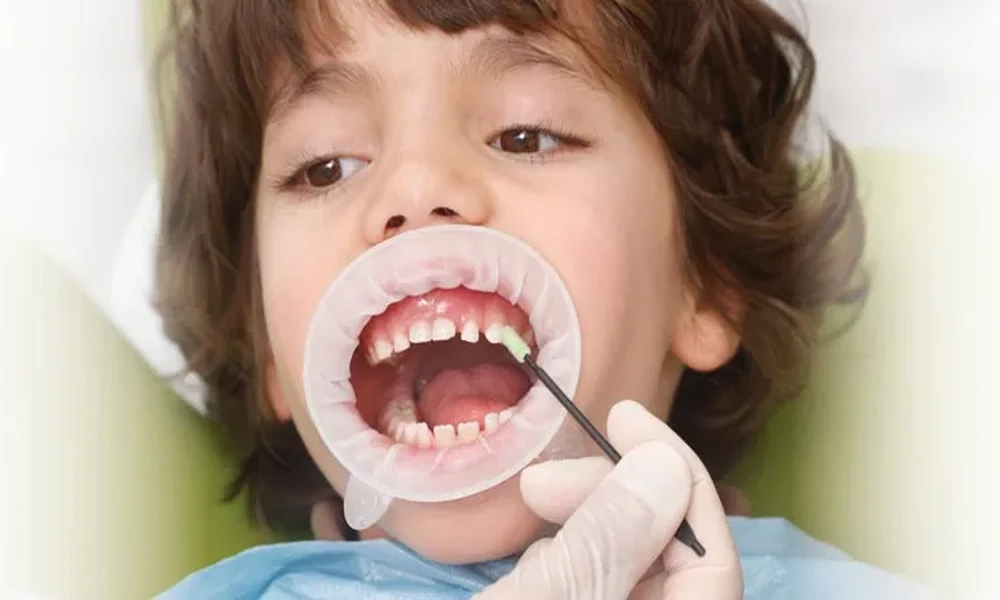
Professional fluoride treatment is a concentrated fluoride applied to the teeth during a dental visit. It may come as a varnish, foam, or gel, though varnish is common for children because it is quick and easy. Once applied, it sticks to the tooth surface and gives enamel time to absorb minerals that help strengthen it.
This matters most in the early years, when children are still developing brushing skills and may not always spit toothpaste well or clean thoroughly along the gumline and back molars. A fluoride treatment does not replace brushing or flossing. It supports them. Think of it as extra reinforcement at the moments when kids need the most help staying ahead of decay.
The American Academy of Pediatric Dentistry supports fluoride therapy as part of a preventive plan for infants, children, adolescents, and individuals with special health care needs, based on risk for caries. That risk-based approach is important. Some children may need fluoride more often than others.
How does professional fluoride compare with home care alone?
If you are wondering whether home care is enough, the answer depends on your child’s habits and cavity risk. Brushing with fluoride toothpaste every day is the foundation. Still, a professional application delivers fluoride in a stronger form and is placed directly where protection is needed most.
| Approach | What It Does | Best Use | Limits to Know |
| Fluoride toothpaste at home | Helps strengthen enamel during daily brushing | Everyday prevention for all children | Depends on brushing quality and consistency |
| Professional fluoride treatment | Provides a concentrated coating that protects weak spots | Children with moderate or high cavity risk, or those still learning oral hygiene | Works best when paired with strong home habits |
| No fluoride support | Relies only on brushing technique and diet control | Rarely the best plan for cavity-prone children | Less protection against enamel breakdown and early decay |
Public health guidance also supports early prevention. The CDC’s oral health tips for children recommend fluoride toothpaste and regular dental visits as part of keeping teeth healthy from the start. If your child has had even one cavity, gets frequent snacks, wears braces later on, or struggles with brushing, that added support can make a real difference.
Could skipping fluoride now lead to bigger problems later?
It can. Untreated decay in baby teeth is not a small issue just because those teeth will fall out. Cavities can cause pain, affect sleep, make eating harder, and sometimes lead to infections or emergency treatment. They can also influence how adult teeth come in and how children feel about dental visits moving forward.
There is also the cost side to consider. A preventive treatment is usually far simpler and less expensive than fillings, crowns, or urgent care for tooth pain. When you look at the bigger picture, fluoride treatments for kids often help families avoid stress that grows quickly once decay takes hold.
What can you do right now to protect your child’s smile?
1. Ask about your child’s cavity risk. Not every child needs the same schedule. A pediatric dental provider can look at diet, brushing habits, past cavities, enamel strength, and age to decide how often fluoride should be used.
2. Check your home routine. Use the right amount of fluoride toothpaste for your child’s age and supervise brushing, especially at night. Many children need help longer than parents expect, often until they can write neatly and manage small hand movements well.
3. Keep preventive visits on schedule. A routine checkup is not only about cleaning teeth. It is a chance to spot weak areas early, apply preventive care, and adjust the plan before a small issue becomes a painful one.
When you want fewer surprises, prevention usually brings peace of mind
If you have been unsure about fluoride, that hesitation is understandable. You want to protect your child without adding things they do not need. In most cases, though, fluoride is a simple, safe, and effective part of preventive dental care for children, especially when recommended by a trusted provider. It supports stronger enamel, lowers the chance of cavities, and helps make future dental visits easier, not harder.
When you are planning your child’s next visit with a pediatric dentist, ask whether professional fluoride is a good fit. A small step now can help protect your child from bigger dental problems later.
