

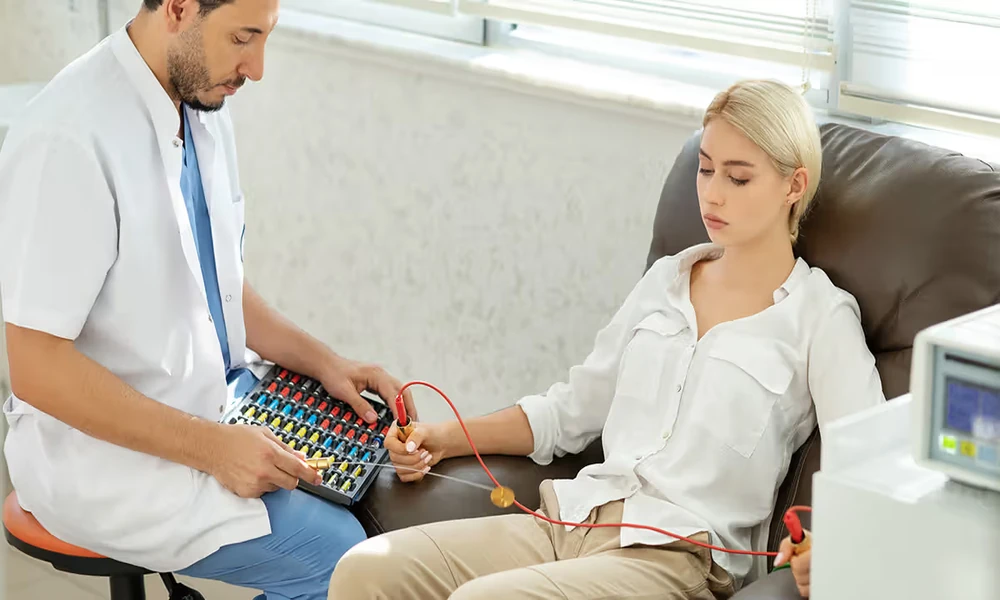
Bioresonance is a complementary wellness approach that uses specialised equipment to detect and analyse electromagnetic signals associated with the body. A bioresonance machine is the device used in this process, with proponents describing it as a way of exploring patterns in the body’s electromagnetic activity.
The concept is based on the idea that cells and tissues produce electromagnetic signals and that these signals may change under different physiological conditions. Bioresonance practitioners use specialised devices to measure or work with these signals as part of a wellness session.
Because bioresonance encompasses different technologies and protocols, the way a session is conducted can vary between providers.
How Does a Bioresonance Machine Work?
A bioresonance machine typically involves sensors, electrodes, or other contact points that are placed on or held by the individual. The equipment is designed to detect electrical or electromagnetic signals and process the information through its associated software or hardware.
Depending on the specific system, the practitioner may use the equipment to display readings or patterns that are then discussed during the session.
The exact technology, terminology, and operating principles can differ between devices. For this reason, anyone considering bioresonance should ask the provider which equipment is being used and what the session involves.
What Happens During a Session?
A bioresonance session generally begins with an explanation of the process and the individual’s wellness goals. The practitioner may then position sensors or electrodes at designated points on the body.
The bioresonance machine processes the signals collected through the equipment according to its particular system. A session may involve reviewing the information displayed by the device and discussing observations with the practitioner.
Session length and procedures can vary depending on the equipment and provider. Some systems may involve a single session, while others may be incorporated into a broader complementary wellness programme.
What Is Bioresonance Used For?
Bioresonance is commonly presented as a complementary approach within wellness settings. Individuals may explore it as part of broader goals related to relaxation, wellbeing, lifestyle awareness, or personalised wellness routines.
The intended purpose can vary considerably between practitioners. Some providers may incorporate bioresonance into programmes that also include nutritional guidance, lifestyle recommendations, or other complementary practices.
It is important to distinguish wellness applications from conventional medical diagnosis. A bioresonance session should not be considered a substitute for appropriate medical assessment, laboratory testing, imaging, or other clinically established diagnostic procedures when these are required.
Understanding the Technology
The technology behind a bioresonance machine can differ depending on the manufacturer and model. Some devices use electrodes or sensors to collect electrical signals, while others may incorporate different forms of measurement or signal processing.
Because there is no single standardised bioresonance device, asking specific questions about the technology can help individuals understand what they are receiving.
Useful questions may include what the equipment measures, how the readings are generated, how information is interpreted, and what qualifications the practitioner has.
Is Bioresonance the Same as Medical Testing?
Bioresonance and conventional medical testing serve different purposes. Medical diagnostic tests are designed and validated for specific clinical applications, such as measuring blood glucose, identifying infections, or examining internal structures through imaging.
Bioresonance is generally offered as a complementary wellness service. The information generated during a session should therefore be understood within the context of the particular device and service being provided.
If someone has persistent symptoms or concerns about a medical condition, consultation with an appropriate healthcare professional remains important.
What Should You Consider Before a Session?
Before trying bioresonance, consider your reasons for exploring the therapy and what you expect from the session. Ask the provider to explain the equipment, procedure, duration, and associated costs beforehand.
It is also useful to understand how the information generated by the device will be presented. Clear communication can help ensure that individuals have realistic expectations about what the session can provide.
People taking medication or managing an existing health condition should discuss complementary therapies with their healthcare professional where appropriate.
Conclusion
So, what is a bioresonance machine and how does it work? It is specialised equipment used in bioresonance sessions to detect and process signals according to the technology and methodology of the particular system.
Bioresonance is best understood as a complementary wellness approach rather than a replacement for established medical diagnosis or treatment. Anyone interested in exploring it can make a more informed decision by understanding the equipment, asking questions about the session, and considering how it fits within their overall healthcare and wellness routine.
