

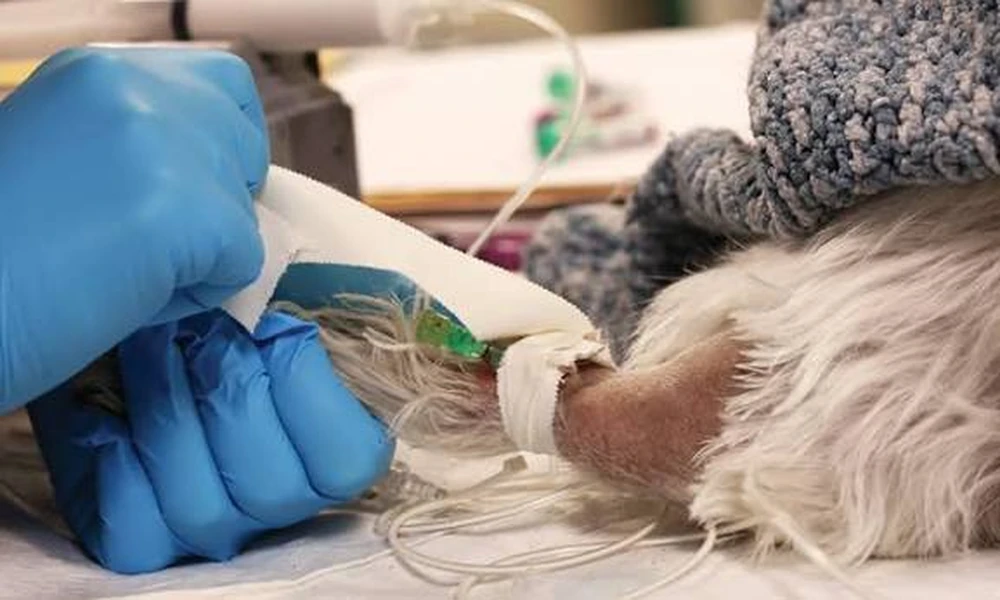
If your pet is in the hospital with an IV catheter, you are probably watching every detail and wondering what can go wrong. At an animal hospital in Valencia County, NM, a small bandage on a leg can carry a lot of weight when your dog or cat is already sick, dehydrated, recovering from surgery, or staying for fluids and medication. One of the problems veterinary teams watch for closely is inflammation around the catheter site. It can start as mild irritation, then turn into pain, swelling, poor fluid delivery, or infection if it is missed.
How Animal Hospital Teams Recognize Inflammation Around A Pet’s IV Catheter comes down to steady monitoring, hands on checks, and quick action when a site changes. Staff look for heat, swelling, redness, discomfort, leaking fluids, or a limb that no longer looks or feels normal. They also watch your pet’s behavior, because some animals show trouble before the skin changes much.
Animal hospital staff monitor IV catheter sites with repeated physical checks
An IV catheter gives a team direct access to a vein, which helps with fluids, pain relief, antibiotics, anesthesia support, and emergency care. It also creates a point where the vein and surrounding tissue can become irritated. That irritation may be mechanical, caused by the catheter moving in the vein. It may be chemical, caused by the fluid or medication. It may also be infectious if bacteria enter the site.
You can see why this matters fast. A pet may already be weak, anxious, or not acting like themselves. If inflammation starts around the catheter, they may not be able to tell anyone in an obvious way. Some pets lick at the bandage. Some pull the leg back when touched. Some just get quiet. In a busy treatment area, that subtle change is exactly why routine checks matter so much.
Veterinary teams usually assess the catheter site at regular intervals, not just when a bag of fluids is changed. They feel above and below the bandage, compare the limb to the opposite side, and check whether fluids are flowing as expected. A site that flushes poorly, looks puffy, or feels cool from fluid under the skin can point to infiltration. A site that feels warm, tender, and slightly firm can suggest phlebitis, which is inflammation of the vein.
Fluid therapy itself is planned carefully because the type of patient, the fluid choice, and the rate all affect risk. The University of Illinois outlines how clinicians build a fluid therapy plan around the pet’s condition, hydration status, and ongoing losses. That planning helps reduce complications, but it does not remove the need for close catheter monitoring once treatment starts.
Signs of IV catheter inflammation in pets often appear before a serious complication
The early signs are usually local. Redness at the insertion point, swelling under the bandage, a damp wrap, pain when the leg is handled, or a pet that suddenly resists treatment can all signal a problem. Sometimes the leg looks larger than the other one. Sometimes the skin feels tight. If the catheter has slipped out of the vein and fluids are going into surrounding tissue, the area may become puffy and cool.
IV catheter site swelling in pets is one of the clearest warning signs, but it is not the only one. Staff also pay attention to blood backing up into the line, a catheter that no longer flushes smoothly, or a pet that keeps turning to look at the limb. Those details matter because a bandage can hide the insertion site, and behavior may be the first clue that the tissue underneath is irritated.
Good catheter care protocols are very specific. Virginia Tech’s guidance for small animal IV catheter placement and monitoring describes clip and prep technique, securement, labeling, and site checks. Research settings also use detailed standards for ongoing catheter care and complication tracking, as shown in this catheter maintenance protocol. In practice, that means trained teams do not treat a catheter like a set it and forget it device.
Common catheter site changes and what they can mean
| What the team notices | What it may suggest | Typical response |
|---|---|---|
| Mild redness at insertion site | Early irritation or friction | Recheck often, assess comfort, consider replacing catheter |
| Soft swelling under or above bandage | Fluid infiltration outside the vein | Stop fluids, remove catheter, evaluate tissue |
| Warmth, tenderness, firm vein | Phlebitis or vein inflammation | Remove catheter, choose new site, monitor for worsening |
| Wet bandage or leaking fluid | Loose connection or displaced catheter | Inspect setup, stop use until site is confirmed safe |
| Pet licking, guarding, or reacting to touch | Pain, irritation, or swelling before visible changes | Uncover and inspect site promptly |
This is where pet IV catheter inflammation becomes more than a technical issue. If it is missed, treatment may stop working the way the team expects. Fluids may not reach the bloodstream. Medications may not be delivered properly. Tissue can become sore or damaged. In some cases, the catheter has to be replaced, which means another clip, another prep, and another needle stick for an animal that has already had a hard day.
Careful monitoring in an animal hospital protects both treatment and comfort
The goal is not only to keep the line working. The goal is to protect your pet’s comfort while treatment continues safely. That is why a good animal hospital team checks the bandage, the limb, the line, and the pet together. A normal looking fluid bag does not prove the catheter site is healthy. A calm pet does not always mean there is no issue. The full picture comes from repeated observation.
If you are visiting your pet or speaking with the care team, you can ask whether the catheter site is clean, dry, comfortable, and flushing well. That is not being difficult. It shows you understand what matters. Most teams appreciate owners who want clear updates.
Steps you can take right away if your pet has an IV catheter
Ask for a simple catheter update. You do not need a long medical explanation. Ask whether there is any redness, swelling, pain, leaking, or concern about the site. Ask if the catheter is still working as intended.
Report behavior changes fast. If your pet suddenly licks at the bandage, cries when the leg is touched, limps, or seems unusually restless during hospitalization or after discharge with a catheter, tell the veterinary team right away.
Do not adjust the bandage yourself. A loose wrap, exposed line, or damp tape needs professional attention. Pulling at it or tightening it at home can make things worse and can hide swelling that needs to be seen.
Most IV catheter problems are manageable when they are caught early. That is why careful observation matters so much. A strong veterinary team does not just place the catheter and move on. They keep checking, because small changes at the site can say a lot about your pet’s comfort and safety. If your pet is receiving fluids or medications through a catheter, stay engaged, ask direct questions, and keep the focus on early signs of trouble.
