

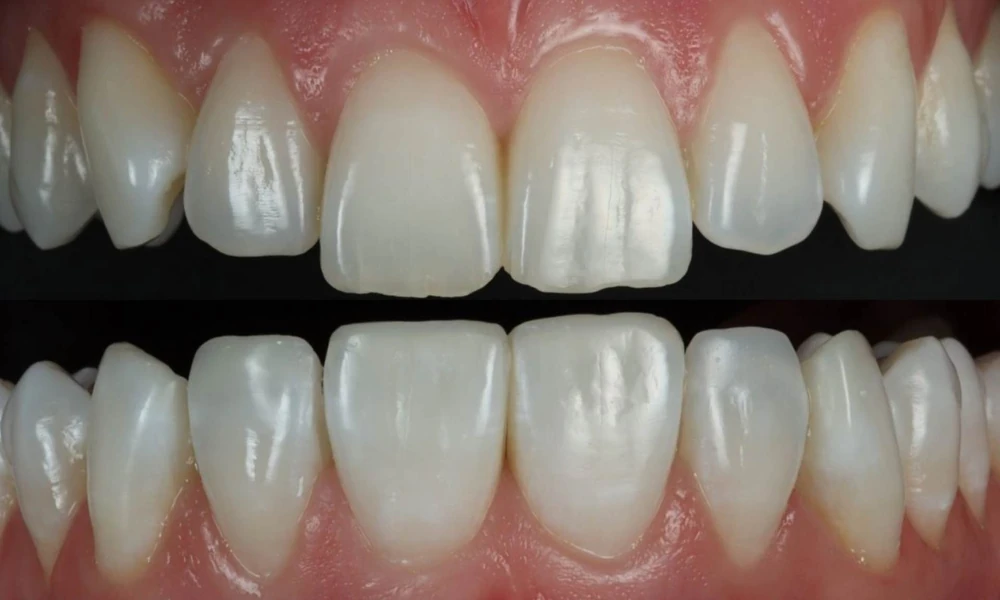
You chip a tooth, crack an old filling, or notice a worn edge that catches on your tongue, and suddenly a small problem starts taking up a lot of space in your day. You may be thinking about cost, how long the fix will last, whether it will look natural, and how much drilling is involved, which is why seeing a family dentist in North Houston can help you understand your options. That tension is real. A damaged tooth can affect how you eat, speak, smile, and even how much attention you give your own reflection.
Most of the time, the choice comes down to this. Direct bonding is usually faster, less costly up front, and done in one visit. A laboratory made restoration such as a crown, veneer, inlay, or onlay often costs more and takes longer, but it may offer better strength, fit, and longevity when the tooth has lost more structure. The right answer depends on how much of the tooth is damaged, where the tooth sits in your bite, and what you need the repair to do every day.
Direct bonding works well when the damaged tooth still has enough healthy structure
Direct bonding uses tooth colored resin that is shaped directly on your tooth. It is often a good option for small chips, worn edges, minor cracks, gaps, and cavities in areas where the tooth is not under extreme pressure. If your front tooth has a small corner missing, bonding can often restore the shape quickly and blend in well with the surrounding enamel.
The appeal is easy to understand. Bonding is conservative, which means less removal of healthy tooth structure in many cases. It is also commonly completed in one appointment. For someone balancing work, family, and a repair that suddenly cannot wait, that matters. The National Institute of Dental and Craniofacial Research explains the basics of dental fillings and restorative materials, including the role of tooth colored options.
Bonding does have limits. Resin is not as strong as porcelain or metal based materials for larger repairs. It can stain over time, chip under heavy bite pressure, and wear faster if you grind your teeth or bite into hard foods often. If the damaged area is large, bonding may look fine at first but fail sooner than you hoped. That can mean more repairs, more cost over time, and more frustration.
Laboratory made restorations offer more strength when the tooth needs deeper support
A lab made restoration is created outside the mouth from an impression or digital scan, then bonded or cemented into place. This includes crowns, veneers, inlays, and onlays. These restorations are often recommended when a tooth has a large broken area, a failing large filling, or damage that affects how the tooth handles chewing force.
If a back molar has a deep crack and a big old filling, a simple bonded repair may not protect the tooth well enough. In that case, a crown or onlay may cover and reinforce the remaining tooth so it can function without splitting further. MedlinePlus outlines common reasons for dental crowns and what they are used for, especially when a tooth is weakened or heavily restored.
The tradeoff is time and cost. A laboratory made restoration usually takes at least two steps unless your office offers same day milling. More tooth structure may need to be shaped so the restoration fits securely. For some patients, that sounds like a bigger commitment because it is one. Still, if the tooth is already compromised, the stronger option can prevent a cycle of patching and redoing.
The best choice depends on function, appearance, and the amount of remaining tooth
This is where the decision becomes personal. A small chip on a front tooth and a cracked molar are both damaged teeth, but they do not ask the same thing from a repair. Front teeth carry more cosmetic pressure. Back teeth carry more biting force. A person who clenches at night has different needs than someone who does not. A tooth with a tiny fracture line is different from one that has lost half its biting surface.
Materials keep improving, and that helps. Research supported by NIDCR continues to advance dental materials used in modern restorations, including options designed for better durability, bonding, and appearance. Even so, no material can fully make up for choosing the wrong type of repair for the wrong situation.
That is why direct bonding vs lab made restoration is not just a cosmetic question. It is a structural one. You are choosing between a repair that adds material directly to the tooth and one that is engineered outside the mouth to replace or protect a larger portion of it.
Comparing tooth bonding and a custom dental restoration
| Factor | Direct Bonding | Laboratory Made Restoration |
|---|---|---|
| Best for | Small chips, minor wear, small to moderate cavities, cosmetic reshaping | Large fractures, weakened teeth, big old fillings, heavy bite stress |
| Visits | Usually 1 | Usually 2, sometimes 1 with same day technology |
| Tooth reduction | Often minimal | Usually more shaping needed |
| Strength | Good for smaller repairs | Better for larger or load bearing repairs |
| Appearance | Natural looking, may stain over time | Highly aesthetic, strong color stability with many materials |
| Longevity | Often shorter for large repairs or heavy grinders | Often longer when properly planned and maintained |
| Cost | Lower initial cost | Higher initial cost |
Clear next steps help you avoid a repair that only buys time
Ask how much healthy tooth remains. This is the first question because it shapes every other choice. If most of the tooth is intact, tooth bonding for a damaged tooth may be enough. If a large section is gone or cracked, a custom restoration may be the safer path.
Look at your bite, not just the damage you can see. A repair on a back tooth that absorbs heavy chewing force has to survive a different job than one on a front tooth. If you grind, clench, or have a history of broken fillings, mention it. That detail can change the recommendation from a simple patch to a stronger long term fix.
Compare short term savings with long term value. Lower cost today can be the right choice when the damage is small. It can also become more expensive if the repair keeps breaking. Ask your cosmetic and restorative dentist which option is most likely to protect the tooth for the next several years, not just the next few months.
When you are choosing a restoration for a damaged tooth, the goal is not the quickest fix or the fanciest one. The goal is a repair that fits the tooth you have, the bite you live with, and the result you want every time you smile or chew. A careful exam can make the decision much clearer and help you move forward with less second guessing.
