

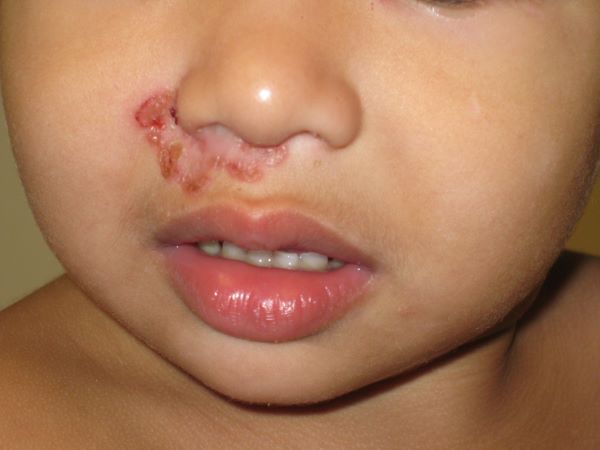
Skin disorder or lesion can in general may not possess harm to others as it is not contagious. However, there are certain skin problems that people should watch out for as it is easily spread to others, especially among children. One of them is impetigo. Impetigo is most common among children and it is nicknamed as ‘school sores’ due to the common occurrence.
Impetigo is a skin infection caused by bacteria of Staphylococcus aureus and Streptococcus pyogenes. Impetigo can be caused by one or both of the bacteria at a time. Impetigo usually causes sores on the skin and becomes an itchy one. Initially, the sores will form blisters and then burst. It is then covered with golden-brown crust patches, often described as cornflakes being stuck onto the skin or as if it has been covered by honey. Small spots can be found around the first sores formed which are then spreading out. It is likely to find some form of peeling on the edge of the sore. Impetigo can be spotted on the nose, mouth, face, neck and arms or legs. Other symptoms associated with impetigo are fever and swollen glands.
Although generally impetigo is more common in young children, anyone could catch it. The bacteria causing impetigo can be spread through direct physical contact with a person infected by it or when touching objects that have been contaminated by the bacteria. Interestingly, the same bacteria causing impetigo does actually live on the skin without causing any problems but at times it could be causing infection such as the impetigo. Person with skin injuries such as from cuts, insect bites, burns or abrasion, or other infections of the skin is at risk for impetigo. This is due to the compromised skin condition that enables bacteria to invade the affected skin. Other reasons why children are prone to impetigo is the poor personal hygiene which includes improper handwashing, failing to clean the body or faces properly and sharing possible contaminated objects with others such as toys or towels.
In general, impetigo can get better without treatment around 2 to 3 weeks. Getting treatment may actually help to reduce the time needed for impetigo to heal by 7 to 10 days. Risk of infection can be lowered when a person gets treatment and helps to reduce the likelihood of spreading the infection further. Impetigo is said to not be contagious 48 hours after starting medicine from a physician or when the patches have dried out/crust over. Taking care of a child with impetigo may be difficult to some parents but it is necessary for parents to pay close attention to the child and aid with recovery. What parents or guardian can do is:
1- Keep the child at home to minimise contact with others for at least the first 24 hours after beginning treatment
2- Use cream or ointment as prescribed according to the healthcare provider’s advice
3- Preventing the child from scratching the sores because scratching can lead to scarring, bleeding and prolonged infections
4- Remind the child to practise good hand hygiene by frequent washing hands
5- Cover the sores with dressing
6- Cut the child’s fingernail short to prevent damages from scratching
7- Make sure to wash the child’s clothes, towels and bedding separately from other family members. Use hot water when washing it and dry it in the sunshine or high temperature dryer
8- Wash the child’s toys with detergent and warm water or mild disinfectant
9- If the child is presented with other skin problems such as eczema, make sure to treat it well
If the above steps have been taken and the child shows no improvement of symptoms or the impetigo keeps coming back, take the child to a doctor for further evaluation.
